Stock Market: A Comprehensive Professional Guide to Equity Markets, Investing, Trading, and Wealth Creation

The stock market is one of the most powerful engines of wealth creation in the modern financial system. It enables individuals, institutions, and governments to participate in economic growth by investing in publicly listed companies. For professionals, investors, and serious market participants, understanding how the stock market works is not optional — it is essential.

This in-depth guide explains the stock market structure, equity investing, trading strategies, market instruments, risk management, valuation, regulations, and real-world case studies. It is designed for readers who seek clarity, depth, and long-term perspective rather than speculation.


What Is the Stock Market?

The stock market is a marketplace where shares of publicly listed companies are issued, bought, and sold. It connects companies seeking capital with investors seeking returns.

The stock market transfers money from the impatient to the patient.

Stock markets function through regulated exchanges and electronic trading platforms, ensuring transparency, liquidity, and fair price discovery.

Why the Stock Market Exists


Structure of the Stock Market

Primary Market

The primary market is where companies issue shares for the first time through:

Secondary Market

The secondary market is where existing shares are traded among investors on stock exchanges.


Major Stock Exchanges

RegionStock Exchange
IndiaNSE, BSE
USANYSE, NASDAQ
UKLondon Stock Exchange
GlobalTokyo, Hong Kong, Frankfurt

In India, the National Stock Exchange (NSE) and Bombay Stock Exchange (BSE) dominate equity trading.


Key Participants in the Stock Market


Stock Market Instruments

Equity Shares

Represent ownership in a company and provide voting rights and dividends.

Preference Shares

Offer fixed dividends but limited voting rights.

Derivatives

Exchange Traded Funds (ETFs)

Market-linked funds that trade like stocks.

Indices

Benchmarks like Nifty 50, Sensex, S&P 500 track overall market performance.


How the Stock Market Works

Stock prices move based on demand and supply. When more investors want to buy a stock, prices rise; when selling pressure increases, prices fall.

Factors influencing stock prices:


Stock Market Investing vs Trading

AspectInvestingTrading
Time horizonLong termShort term
FocusFundamentalsPrice movement
RiskModerateHigh
FrequencyLowHigh

Stock Market Investment Strategies

Value Investing

Buying fundamentally strong stocks trading below intrinsic value.

Growth Investing

Focusing on companies with high growth potential.

Dividend Investing

Investing in companies with consistent dividend payouts.

Index Investing

Passive investing through index funds and ETFs.

Long-Term Buy and Hold

Compounding works best over long periods.


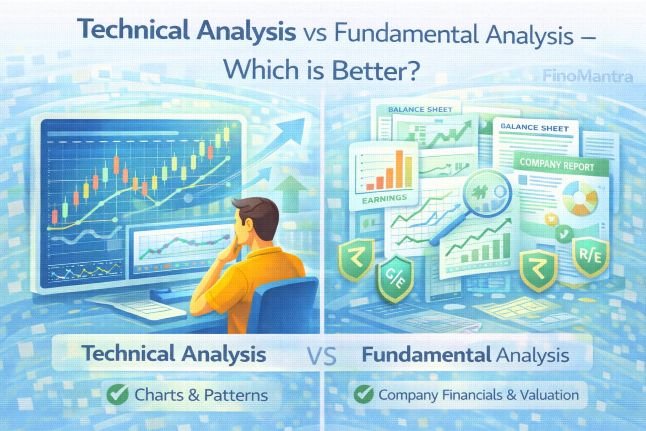
Fundamental Analysis

Fundamental analysis evaluates a company’s intrinsic value using:

Key Financial Ratios

RatioPurpose
P/E RatioValuation
ROEProfitability
Debt-EquityFinancial risk
EPSEarnings performance

Technical Analysis

Technical analysis studies price charts, volume, and indicators to predict short-term price movements.

Popular Technical Indicators


Risk Management in the Stock Market

Risk management matters more than returns in the long run.

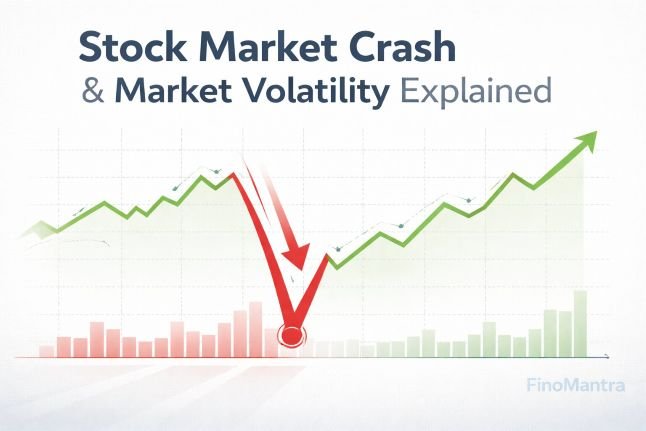
Market Cycles and Investor Psychology

Markets move in cycles:

Successful investors control emotions such as fear and greed.


Regulation and SEBI’s Role

The Securities and Exchange Board of India (SEBI) regulates the Indian stock market.


Case Study 1: Long-Term Equity Wealth Creation

Investor: Rohit, Age 28

Result: Portfolio value crossed ₹1.2 crore due to compounding.


Case Study 2: Trading Without Discipline

Trader: Anonymous

Outcome: Capital erosion within one year — highlighting the importance of discipline.


Common Stock Market Mistakes


Taxation on Stock Market Income (India)

Tax planning improves net returns significantly.


Future of the Stock Market


Conclusion: Stock Market as a Wealth-Building Tool

The stock market is not a gambling platform — it is a disciplined system for wealth creation. Long-term success depends on knowledge, patience, risk management, and emotional control.

In the stock market, time matters more than timing.

Approach the markets with respect, preparation, and long-term vision — and the stock market can become one of the most rewarding financial tools of your life.