Bonds: A Complete Professional Guide to Bond Investing, Fixed Income Markets, Types of Bonds, Risks, Returns, and Portfolio Strategy

Bonds are one of the oldest, most essential, and most widely used financial instruments in global capital markets. As a core component of the fixed income market, bonds play a crucial role in capital preservation, income generation, portfolio diversification, and economic stability.

From governments financing infrastructure to corporations funding expansion, bonds enable long-term borrowing while offering investors predictable cash flows and relatively lower risk compared to equities. This comprehensive guide explores bonds in depth, covering their structure, types, valuation, risks, yields, taxation, market dynamics, and strategic role in modern investment portfolios.


What Is a Bond?

A bond is a fixed income instrument that represents a loan made by an investor to a borrower, typically a government, corporation, or financial institution. When an investor purchases a bond, they are effectively lending money to the issuer in exchange for periodic interest payments and the return of principal at maturity.

A bond is a contractual promise to repay borrowed money with interest over time.

Bonds are legally binding debt instruments and form the backbone of the global debt market.


Key Features of a Bond


How Bonds Work

When a bond is issued, investors purchase it at face value or market price. The issuer pays periodic interest (coupon payments) and returns the principal amount on maturity.

Bonds can be held until maturity or traded in the secondary bond market, where prices fluctuate based on interest rates, credit risk, and market demand.


Types of Bonds

Government Bonds

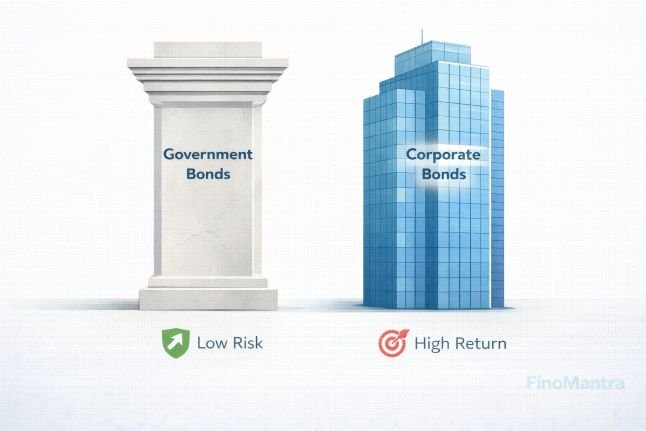
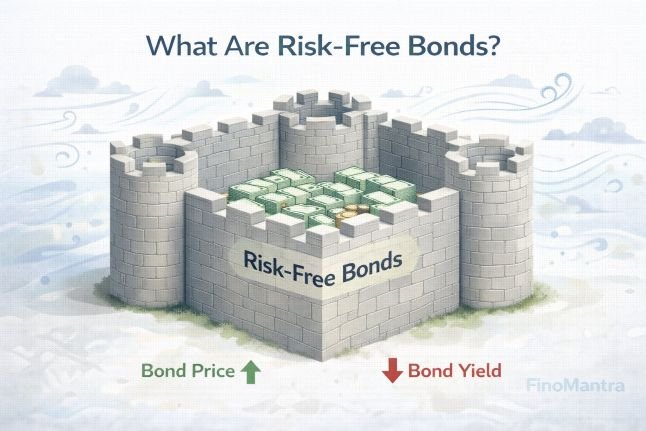
Government bonds are issued by central or state governments and are considered the safest fixed income instruments.

In India, government bonds are issued by the Government of India and state governments, while globally they include US Treasuries, UK Gilts, and Japanese Government Bonds.

Corporate Bonds

Corporate bonds are issued by companies to raise capital for expansion, operations, or refinancing.

Corporate bonds offer higher yields than government bonds but carry higher credit risk.

Municipal Bonds

Issued by local governments or municipalities, these bonds often provide tax advantages.

Agency Bonds

Issued by government-sponsored entities, offering a balance between safety and yield.

Zero-Coupon Bonds

Issued at a discount and do not pay periodic interest. Returns come from price appreciation at maturity.

Inflation-Indexed Bonds

These bonds protect investors against inflation by adjusting principal or interest payments.

Convertible Bonds

Convertible bonds can be converted into equity shares of the issuing company.


Bond Markets Explained

Primary Bond Market

Where bonds are issued for the first time.

Secondary Bond Market

Where existing bonds are traded among investors.

The bond market is larger than the equity market globally and plays a key role in interest rate transmission and monetary policy.


Bond Pricing and Valuation

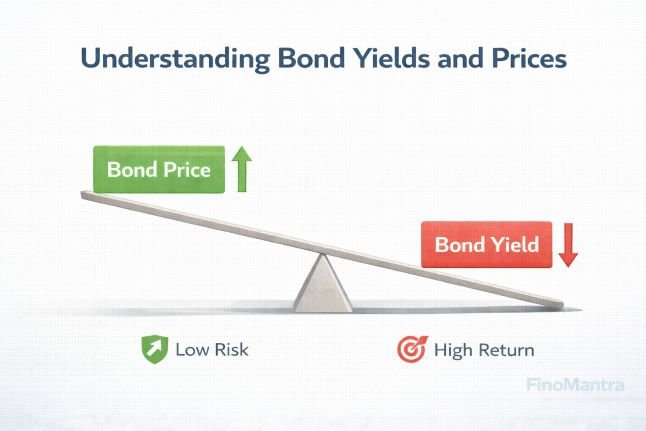
Bond prices are inversely related to interest rates.

Factors Affecting Bond Prices


Bond Yield Explained

Current Yield

Annual coupon ÷ Market price

Yield to Maturity (YTM)

Total return expected if bond is held until maturity.

Yield to Call

Applicable for callable bonds.

Yield is one of the most important metrics for evaluating bond investments.


Risks Associated with Bonds

Interest Rate Risk

Risk of price decline due to rising interest rates.

Credit Risk

Risk that the issuer may default on interest or principal payments.

Inflation Risk

Risk that inflation erodes real returns.

Liquidity Risk

Risk of inability to sell bonds quickly without price impact.

Reinvestment Risk

Risk of reinvesting coupons at lower interest rates.


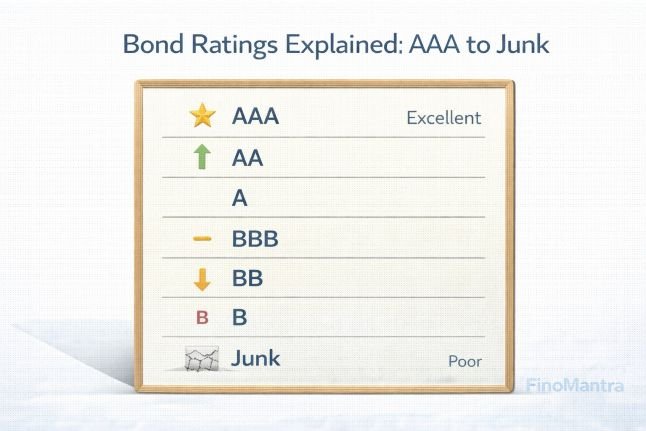
Credit Ratings and Bond Safety

Credit rating agencies evaluate bond issuers and assign ratings based on default risk.

RatingCategory
AAA / AaaHighest quality
AA / AaHigh quality
AUpper medium grade
BBBInvestment grade
BB and belowSpeculative grade

Taxation of Bonds

Bond taxation depends on the type of bond, holding period, and jurisdiction.

Understanding post-tax yield is critical for bond investors.


Bonds vs Other Asset Classes

AssetRiskReturn Potential
BondsLow to ModerateModerate
EquitiesHighHigh
Fixed DepositsLowLow
GoldModerateModerate

Role of Bonds in Portfolio Allocation

Bonds provide stability, predictable income, and downside protection.

Asset allocation strategies typically increase bond exposure with age and risk aversion.


Bonds and Interest Rate Cycles

Bonds perform differently across economic cycles:


Bond Mutual Funds and ETFs

Investors can access bonds through:

These provide diversification, liquidity, and professional management.


Case Study: Bonds for Retirement Income

Investor: Retired professional, age 62

Outcome: Stable income and reduced portfolio volatility.


Future of the Bond Market


Conclusion: Bonds as the Foundation of Fixed Income Investing

Bonds remain indispensable to modern financial systems and investment portfolios. While they may lack the excitement of equities, their role in income generation, capital preservation, and risk management is unmatched.

Bonds reward discipline, patience, and a deep understanding of risk and yield.

For conservative investors, retirees, institutions, and balanced portfolios, bonds continue to serve as the cornerstone of long-term financial stability.